Buying guide
Best bread lame (UK): how to choose a sourdough scoring tool
Straight vs curved blades, fixed vs replaceable, magnetic and retractable handles – what matters in a bread lame, safety tips, and lames listed on Amazon UK.
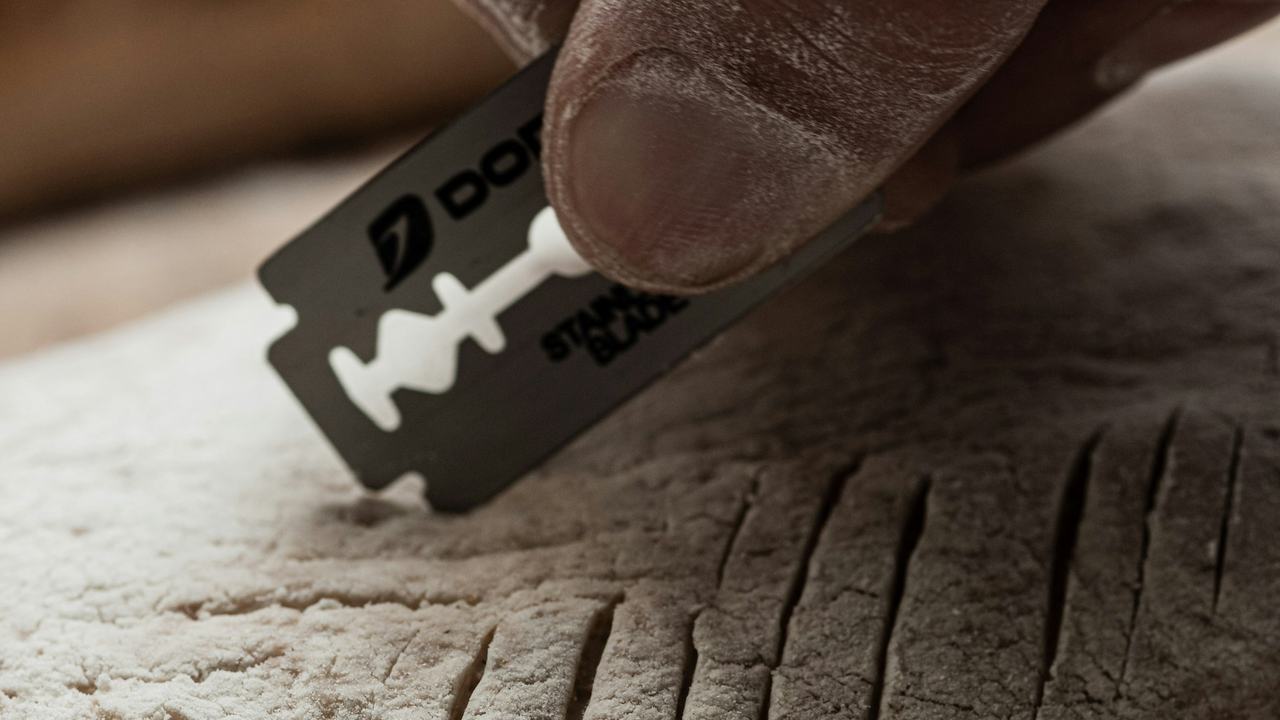
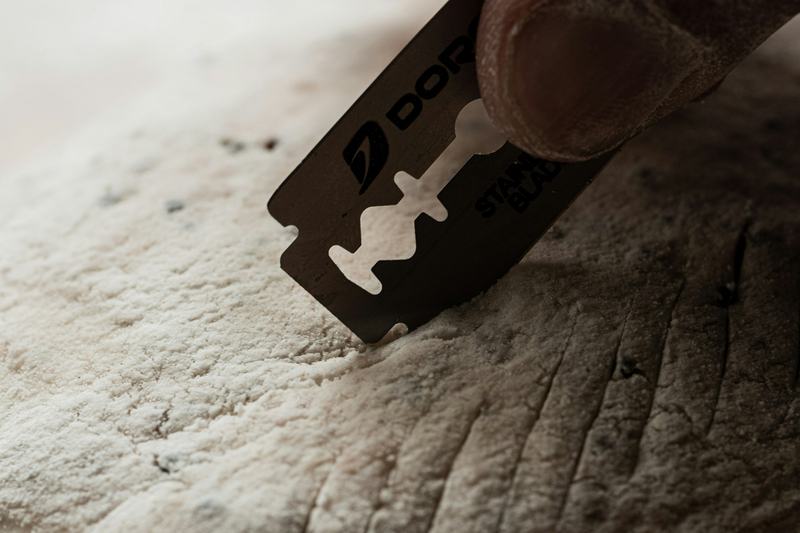
A lame (pronounced "lahm", French for blade) is simply a razor blade on a handle. You use it to slash the surface of the shaped dough just before it goes into the oven. That cut gives the loaf a controlled weak point, so steam and expanding gas open the crust where you choose – creating the "ear" bakers chase – rather than tearing the side of the loaf at random.
You can score with a very sharp knife or a bare razor blade, but a lame is safer, cheaper than you'd expect, and makes it easier to hold the blade at a consistent shallow angle. This guide covers the design choices and the options on Amazon UK.
The short version
- Any lame that holds a standard double-edged razor blade firmly will score well.
- Curved blade = easier ears on bâtards; straight = cleaner decorative patterns.
- Prefer a lame with a blade cover or retractable blade – you'll be storing it in a drawer.
- Buy spare blades; a blunt blade drags and deflates the dough.
At a glance
Our shortlist from published specifications – jump to each product for the reasoning. No prices shown: they change daily.
| Product | Best for | Key details | Link |
|---|---|---|---|
| NiHome Bread Lame – retractable blade, magnetic walnut handle | Safest for storage | Retractable blade · Magnetic blade holder | View on Amazon Ad |
| Bread Lame Dough Scoring Tool with Blade Cover and 5 Feather Blades Top pick | Best simple lame | Blade cover included · 5 Feather blades | View on Amazon Ad |
| Bread Lame Cutter with Knife Sheath, wooden handle and 5 replaceable blades | With sheath | Protective sheath · Ergonomic wood handle | View on Amazon Ad |
| Round "UFO" Bread Lame with 5 blades | UFO lame | Round, palm-held design · Handmade | View on Amazon Ad |
How we chose these lames
We haven't hands-on tested these tools. We compared listings on Amazon UK by blade type (standard double-edged razor blades are easy to replace), how the blade is held (stick, clip, magnet), safety features (covers, retractable mechanisms), handle material and whether spare blades are included.
The anatomy of a good lame
Blade type and replacement
Nearly all lames use standard double-edged safety razor blades – the same blades used in traditional shaving razors – which are inexpensive and widely available in the UK. Avoid lames with proprietary blades you can't replace.
How the blade is held
- Stick lames thread the blade onto a thin metal or wooden stick, which bends it into a curve. Cheap and effective, but changing blades means handling the edge.
- Clip or screw-plate lames clamp the blade flat between two plates. Very secure; good for straight scoring.
- Magnetic lames hold the blade with a magnet, making swaps quick. Check the magnet is strong enough that the blade can't shift mid-cut.
- Retractable lames slide the blade into the handle – the safest option for storage.
Curved or straight?
A curved blade makes it easier to cut a shallow flap at about 30° to the surface on an oval loaf – the classic single slash that produces a pronounced ear. A straight blade gives cleaner lines for decorative patterns (wheat stalks, leaves, crosshatches) and works well on round loaves. Many stick-style lames let you choose by flexing the blade.
Handle
Wood looks nice and grips well; metal and plastic are easier to wash. Whatever the material, the handle should be long enough that your knuckles stay clear of the dough.
Lames on Amazon UK
Safest for storage
NiHome Bread Lame – retractable blade, magnetic walnut handle
- Retractable blade
- Magnetic blade holder
- Walnut wood handle
Retracting the blade into the handle solves the biggest everyday problem with lames: an exposed razor rattling around a drawer. The magnetic holder should make blade swaps quick.
Best simple lame
Bread Lame Dough Scoring Tool with Blade Cover and 5 Feather Blades
- Blade cover included
- 5 Feather blades
- Classic handle design
A conventional lame with a cover and five blades from Feather, a Japanese razor-blade brand that is popular with bakers. Five blades will last a home baker a long time.
Bread Lame Cutter with Knife Sheath, wooden handle and 5 replaceable blades
- Protective sheath
- Ergonomic wood handle
- 5 replaceable blades
A more substantial handle with a protective sheath. A good choice if you'd like something that feels like a proper tool, or as a gift.
Round "UFO" Bread Lame with 5 blades
- Round, palm-held design
- Handmade
- 5 blades
A palm-held disc-style lame. Some bakers find the grip more natural for long, confident slashes; others prefer a traditional handle. An interesting alternative rather than a default choice.
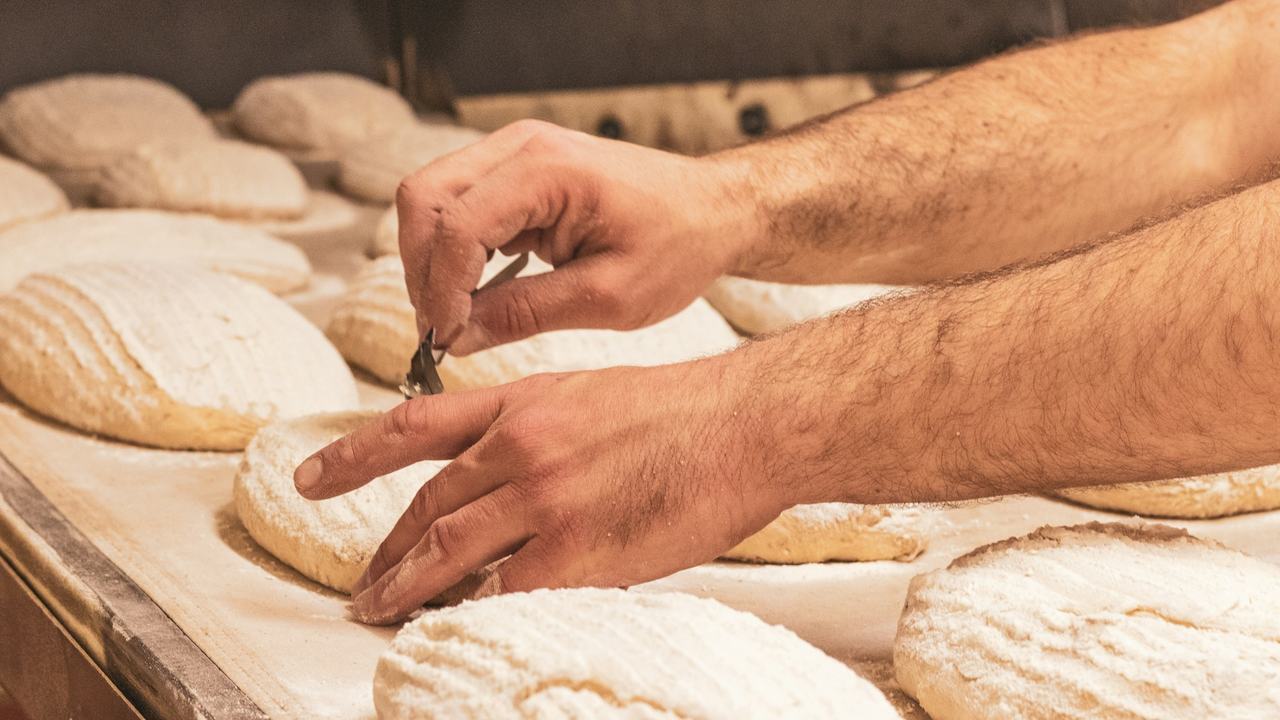
How to score well
- Score straight from the fridge. Cold dough is firmer and the blade drags less – one big advantage of an overnight fridge prove.
- Dust the surface lightly with flour or rice flour first, so the cut contrasts with the crust.
- Be quick and decisive. One smooth motion, about 0.5–1cm deep. Hesitation drags.
- Angle matters. For an ear on a bâtard, hold the blade at around 30° to the surface and cut slightly off-centre, end to end. For a boule, a square or cross pattern at 90° is easier.
- Change blades often. If the blade catches or tears, it's blunt.
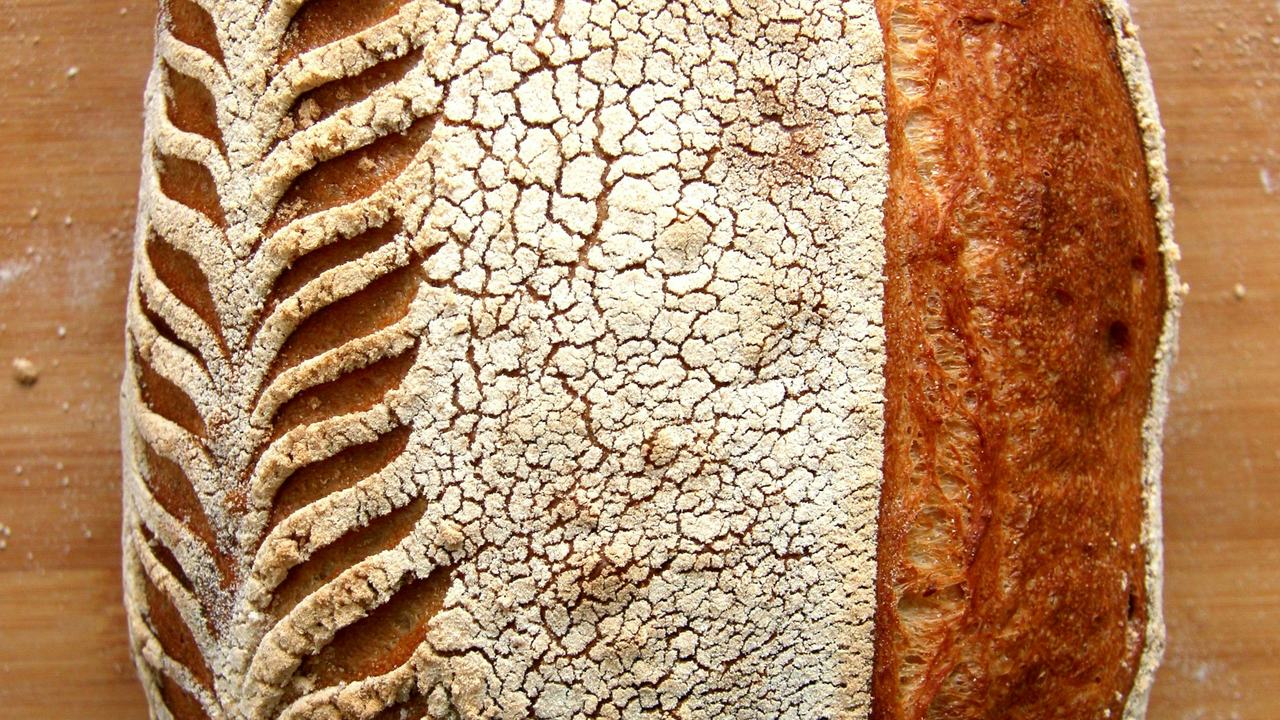
Three beginner scoring patterns
- The single slash (bâtard). One long cut, slightly off-centre, at a shallow angle from end to end. It's the pattern that produces the ear, and the best one to practise first.
- The square (boule). Four straight cuts forming a square or a "#" on top of a round loaf, blade nearly vertical. Forgiving and even, because the loaf opens on all sides.
- The cross (boule). Two cuts at right angles. Simple and traditional; ideal if you're nervous about the angle.
Decorative leaf and wheat-ear patterns are made with many shallow cuts that don't open much. They look best combined with one deeper "expansion" cut elsewhere on the loaf so the bread still has somewhere to spring.
Looking after blades
Razor blades rust quickly in a damp kitchen. Dry the blade after use (wipe away from the edge), and store spares in their paper wrappers. Many bakers change blades every few bakes; if you notice the dough dragging or the cut looking ragged rather than clean, change it immediately.
Do you need a lame at all?
No – a sharp serrated knife or a clean razor blade held carefully will score a loaf. But for a small amount of money a lame gives you better control and much better safety, which is why it's on our starter kit checklist under "genuinely useful". It also makes an excellent small present – see gifts for sourdough bakers under £20.
The bottom line
Choose any lame that takes standard double-edged blades, has a cover or retractable blade, and comes with a few spares. The retractable NiHome and the covered Feather-blade lame are sensible picks on paper; the rest is personal preference.