Buying guide
Best kitchen scales for sourdough (UK): accuracy, capacity and tare explained
Why sourdough needs a digital scale, what resolution and capacity to look for, why a second 0.1g scale helps, and digital kitchen scales on Amazon UK.
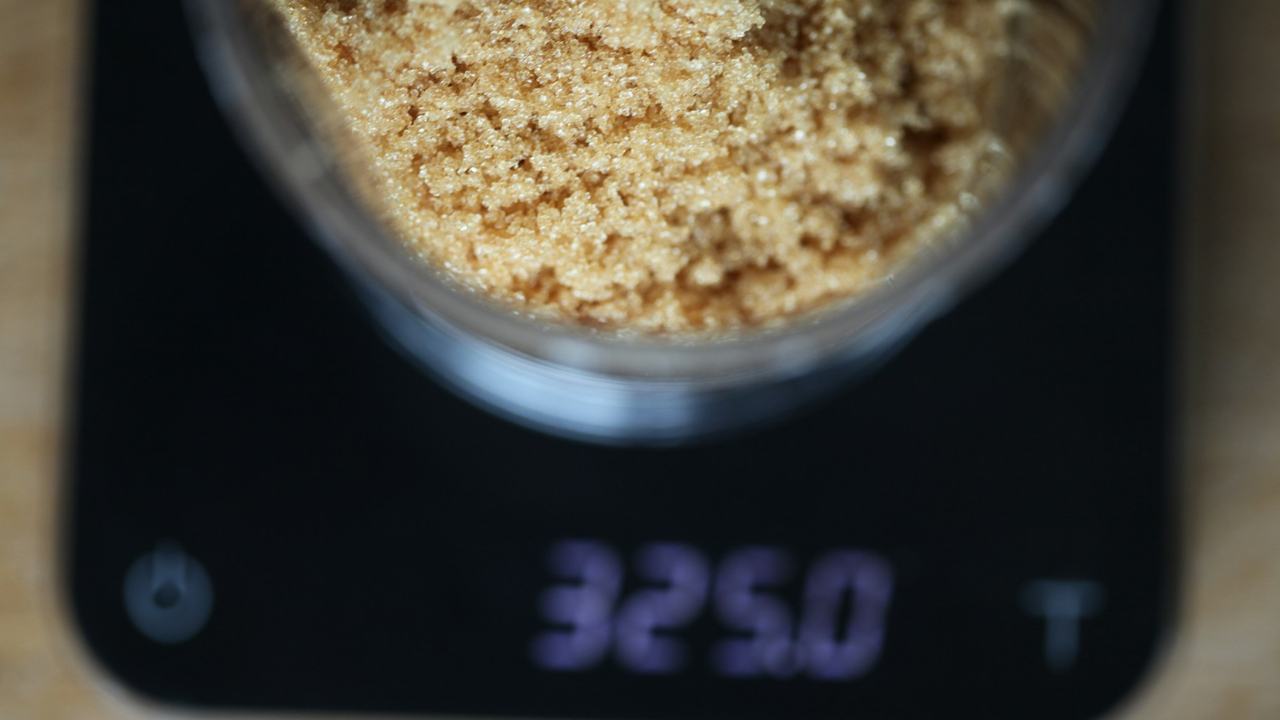
If you only buy one piece of sourdough equipment, make it a digital scale. Every reliable sourdough recipe is written by weight, usually as baker's percentages – water, salt and starter expressed as a percentage of flour weight. That only works if you can weigh accurately and repeatably. A tablespoon of salt can weigh anything from 15g to 20g depending on the grain size; on a scale, 10g is always 10g.
This guide explains the specs that matter for bread – resolution, capacity, tare and platform size – and why many bakers end up with two scales.
The short version
- Main scale: at least 5kg capacity with 1g resolution and a tare function.
- Optional second scale: 0.1g resolution for salt, yeast and small starter feeds.
- Look for a large platform (or a display that stays visible under a wide bowl) and an auto-off delay long enough for slow pouring.
At a glance
Our shortlist from published specifications – jump to each product for the reasoning. No prices shown: they change daily.
| Product | Best for | Key details | Link |
|---|---|---|---|
| Salter Disc Digital Kitchen Scale, 5kg, Aquatronic Top pick | Best everyday scale | 5kg capacity · Aquatronic liquid measuring | View on Amazon Ad |
| Salter Vega Digital Kitchen Scale, 5kg, Aquatronic | 5kg | 5kg capacity · Aquatronic liquid measuring | View on Amazon Ad |
| OXO Good Grips 5kg Stainless Steel Food Scale | Best for big bowls | 5kg capacity · Stainless steel platform | View on Amazon Ad |
| Salter Arc Digital Kitchen Scale, 3kg | 3kg | 3kg capacity · Add and weigh | View on Amazon Ad |
| Brifit Digital Pocket Scale, 500g, with 100g calibration weight | Best second scale | 500g capacity · High-precision pocket scale | View on Amazon Ad |
| Digital Kitchen Scale 3000g / 0.1g, backlit | 3kg × 0.1g | 3kg capacity · 0.1g resolution | View on Amazon Ad |
How we chose these scales
We haven't tested these scales ourselves. We shortlisted digital scales listed on Amazon UK by their stated capacity, resolution, tare function and platform design, favouring established brands with replaceable standard batteries and clear specifications.
Why accuracy matters more in bread than in cakes
Salt is the best example. A typical loaf uses 2% salt – 10g for 500g of flour. If you're out by 2g, that's a 20% error: noticeably salty bread, or a slack, fast-fermenting dough. Small starter feeds are similar: keeping a small starter (say 20g starter + 20g flour + 20g water) means a 1g error is 5%.
Most kitchen scales read in 1g steps, and their accuracy at very low weights can be loose. That's why many bakers add a cheap 0.1g "pocket" scale for small quantities.
What to look for
Capacity
A 3kg scale can handle a single loaf, but a heavy ceramic mixing bowl can weigh 1.5–2kg on its own. 5kg gives comfortable headroom for double batches and heavy bowls.
Resolution and tare
1g resolution is fine for flour and water. Tare (zeroing with the bowl on) is essential – and "add and weigh", where you tare between each ingredient, is how every bread recipe works.
Platform and display
A small round platform under a wide bowl hides the display. Look for a wide flat platform, or a display that pulls out or sits forward of the platform.
Auto-off
Some scales switch off after a minute or two. If you pour water slowly or get distracted mid-recipe, a short auto-off loses your reading. Listings rarely state the delay, so check the manual or Q&A if it matters to you.
Liquid measuring
Some Salter models have an "aquatronic" mode that shows millilitres of water or milk. Handy, but for water 1g = 1ml anyway.
Main scales on Amazon UK
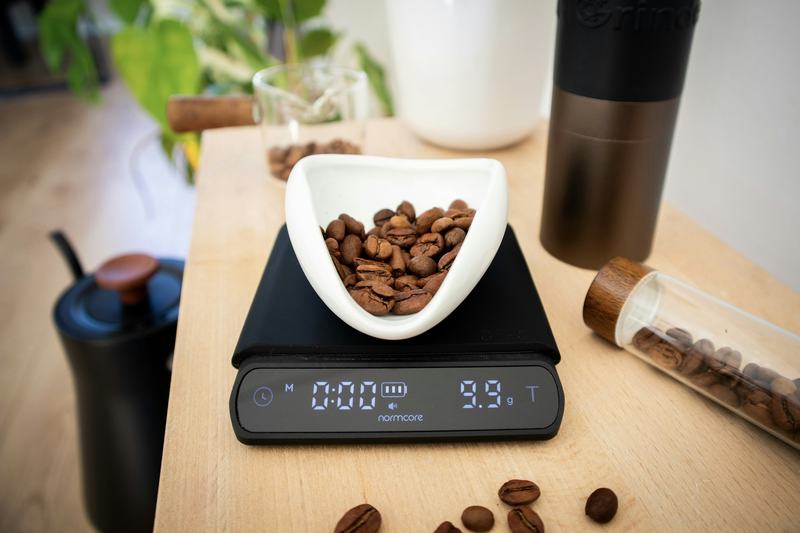
Best everyday scale
Salter Disc Digital Kitchen Scale, 5kg, Aquatronic
- 5kg capacity
- Aquatronic liquid measuring
- Add and weigh tare
A compact, widely sold Salter model with the 5kg capacity we recommend. The disc platform is small, so check that your largest bowl doesn't hide the display.
Salter Vega Digital Kitchen Scale, 5kg, Aquatronic
- 5kg capacity
- Aquatronic liquid measuring
- Flat platform
Another 5kg Salter with liquid measuring. Flat glass-style platforms are easy to wipe clean of flour and dough.
Best for big bowls
OXO Good Grips 5kg Stainless Steel Food Scale
- 5kg capacity
- Stainless steel platform
- Premium kitchen brand
OXO's food scales are a common choice for bakers who use large bowls; check the listing for the display design and current specification before buying. It costs more than the Salter options.
Salter Arc Digital Kitchen Scale, 3kg
- 3kg capacity
- Add and weigh
- Compact
A budget choice if you bake single loaves in a lightweight bowl. If you can stretch to a 5kg model, do.
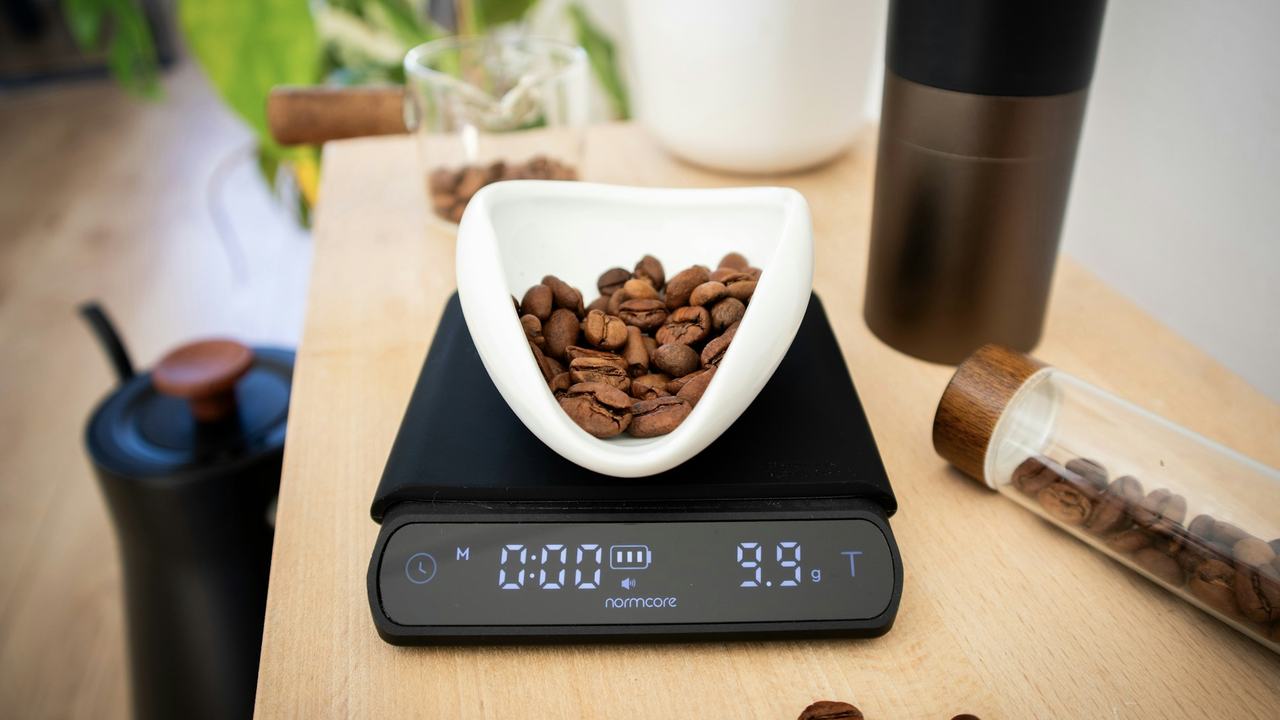
Precision scales for salt and starter
Best second scale
Brifit Digital Pocket Scale, 500g, with 100g calibration weight
- 500g capacity
- High-precision pocket scale
- 100g calibration weight included
- Two trays
A pocket scale like this is ideal for salt, instant yeast, diastatic malt and tiny starter feeds. The included calibration weight lets you check accuracy occasionally.
Digital Kitchen Scale 3000g / 0.1g, backlit
- 3kg capacity
- 0.1g resolution
- Backlit LCD
- Stainless platform
An in-between option: 0.1g resolution with a 3kg ceiling, so one scale can do salt and most single-loaf recipes. A tempting single purchase for a small kitchen, though the platform is small.
Baker's percentages in practice
Here's why a scale and percentages make life easier. A typical beginner formula might read: flour 100%, water 72%, starter 20%, salt 2%. For 500g of flour that becomes:
| Ingredient | Percentage | Weight for 500g flour |
|---|---|---|
| Strong white flour | 100% | 500g |
| Water | 72% | 360g |
| Active starter | 20% | 100g |
| Salt | 2% | 10g |
Want a slightly smaller loaf to fit a 20cm basket? Use 400g flour and everything scales: 288g water, 80g starter, 8g salt. Want to try a wetter dough? Change one number – 75% water – and leave the rest alone. None of that works with cups and spoons, and all of it relies on a scale you trust.
It also makes troubleshooting possible. If a loaf spreads, you can note "72% hydration, 18°C kitchen, 6-hour bulk" and change one variable next time. Bakers who weigh everything learn noticeably faster, simply because their results are repeatable.
One scale or two?
If you keep a large starter and bake one loaf a week, one 5kg scale is enough. Add a 0.1g scale if you keep a tiny starter (to reduce waste), bake with instant yeast or other small additions, or simply want exact salt. Two inexpensive scales usually serve a home baker better than one expensive one.
Looking after a scale
- Keep it away from the hob and oven – heat affects load cells.
- Don't store anything on top of it.
- Replace batteries at the first sign of drifting readings.
- Occasionally check it with a known weight (a sealed 1kg bag of sugar is roughly right; a calibration weight is better).
The bottom line
Get a 5kg, 1g digital scale first – the Salter Disc or Vega fit the bill on paper. Add a 0.1g pocket scale if you keep a small starter or want precise salt. Together they'll cost less than most bannetons.